White-Label Client Reporting: What Paid Media Agencies Need Beyond Dashboards
Learn what makes white-label client reporting useful for agencies, including written analysis, campaign context, branding, and recurring reporting workflows.
White-label client reporting is not just a dashboard with an agency logo. Clients need a clear explanation of performance, campaign changes, and next steps. Agencies need to deliver that explanation consistently without spending hours rebuilding reports.
The best reporting workflow combines branding, data, written analysis, and campaign context.
Dashboards Are Useful, But They Are Not the Whole Report
Dashboards answer basic questions:
- What was spend?
- How many leads or purchases came in?
- What was CPA or ROAS?
- Which campaigns changed?
But dashboards rarely answer the questions clients actually ask on calls:
- What does this mean?
- Why did performance move?
- What did the agency do this month?
- What should happen next?
- Is there anything I need to worry about?
That is why agencies still spend time writing summaries, pulling screenshots, and explaining campaign changes.
A Strong Client Report Needs Context
A useful paid media report should include:
- The client's goals
- Channel-level performance
- Campaign-level highlights
- Notable budget or pacing changes
- Creative or audience observations
- Work completed during the period
- Risks or anomalies
- Recommended next steps
Without context, the report becomes a table of metrics. With context, it becomes a client communication tool.
White-Label Reporting Should Protect the Agency Brand
Branding matters because the report represents the agency's work.
A white-label reporting workflow should support:
- Agency logo and colors
- Consistent formatting
- Client-specific report titles
- Clear executive summaries
- Repeatable sections
- Editable language before delivery
The goal is not to hide automation. The goal is to make the agency's client communication more consistent and professional.
AI Can Help With the First Draft
AI reporting is most useful when it prepares a high-quality first draft that the team can review.
It can help summarize:
- What changed in performance
- Which campaigns drove results
- Where spend shifted
- Which anomalies appeared
- What actions the agency took
- What should be watched next
The team still owns the final wording and client relationship. AI removes the blank page and repetitive assembly work.
Reporting Should Connect to Campaign Work
Many reports fail because they are disconnected from the actual work done during the reporting period.
A better workflow connects:
- Campaign alerts
- Optimization actions
- Budget updates
- Launches
- Creative changes
- Competitive observations
- Client requests
When the report knows what happened operationally, it can explain performance with more credibility.
Common Reporting Mistakes
Agencies should avoid:
- Sending raw dashboards without narrative
- Overloading clients with every metric
- Ignoring campaign changes and only showing outcomes
- Rewriting the same report manually each month
- Using generic AI summaries that do not understand the client
- Letting every account manager produce a completely different report format
The reporting process should be repeatable but still specific to each client.
What to Automate
Good reporting automation can handle:
- Data collection
- Metric summaries
- First-draft written analysis
- Campaign change notes
- Anomaly explanations
- Recurring report structure
- Draft preparation before account manager review
The final review should stay with the agency team.
Where Effective Ads Fits
Effective Ads helps agencies turn campaign data and operational context into white-label reports. The platform is built around paid media workflows, so reporting is connected to monitoring, optimization, and client account history.
That gives agencies a faster way to produce reports that explain the work, not just the numbers.
Related Posts
How to Choose AI Campaign Management Software for an Agency
A practical guide to evaluating AI campaign management software for paid media agencies, including monitoring, approvals, reporting, and multi-client workflows.
Read more
Paid Media Automation: What Agencies Should Automate First
A practical framework for paid media agencies deciding which campaign monitoring, reporting, launch, and optimization workflows to automate first.
Read more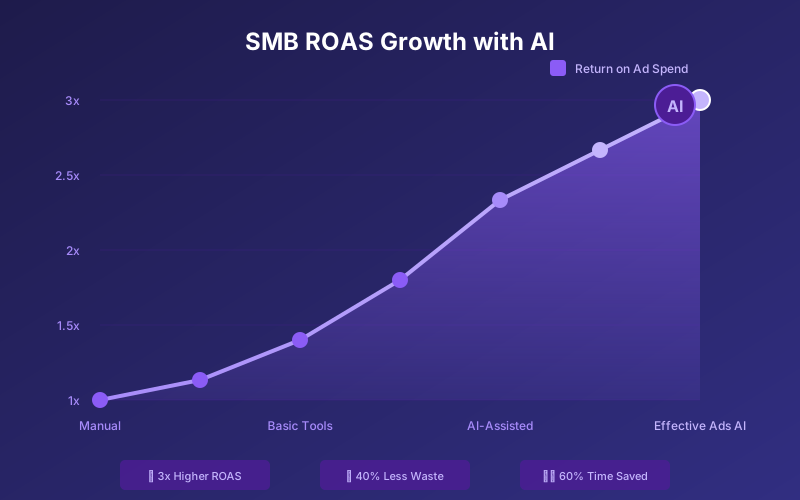
Why Agencies Are Driving 3x Higher ROAS with AI Advertising in 2026
How marketing agencies and advertisers use AI-powered tools like Effective Ads AI to lift client ROAS, cut wasted spend, and manage more accounts without adding headcount.
Read more